

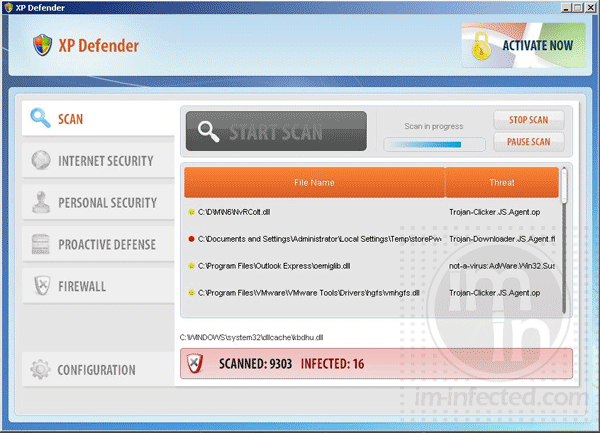
XP Defender virus is another form of rogue security tool. You may not want it inside the computer, but it will get there without your knowledge. Every computer user that is using the Internet without any caution is at risk of catching the XP Defender virus. It will come as a link from various web sites, or Trojan can dropped it inside the computer. Attackers have found simple way to implant this malware onto the computer. They will find any weak spot on your programs and security settings and take advantage of it to infiltrate the PC. The attack is not manually made but through web robots, that scans every online computer for vulnerable spot. Since the attack is automated, deployment of XP Defender is abrupt.
When XP Defender fake program is installed on the computer, it starts the activity by flashing alerts and notices. It detects threats and other forms on infection to persuade you into buying the full version of XP Defender virus. Other than that, the malware runs a scan each time you start Windows. Expect that the fake anti-virus will detect dozens of threats after the scan.
You must ignore all warnings revealed by XP Defender. Instead, make way to prevent the virus from making further damage to your PC. You can only do this by removing it as early as you see the signs on infection. Follow the steps below to remove XP Defender virus and all files it has dropped inside your computer.
What are the Symptoms of XP Defender Virus Infection?
Each time you start Windows, XP Defender virus pretends to scan the computer. Then, it displays a scan result that is fictitious. Additionally, the malware flashes fake security warning to deceive you and tries to convince that registered version of XP Defender is needed to remove the threats.
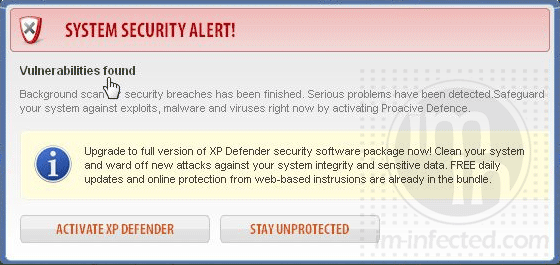
One of the many fake notices that XP Defender will issue contains the following text:
System Security Alert!
Vulnerabilities found
Background scan for security breaches has been finished. Serious problems have been detected. Safeguard your system against exploits, malware and viruses right now by activating Proactive Defence.
Procedure 1: Uninstall XP Defender Virus from Windows Control Panel
1. Begin the removal process by uninstalling the rogue program from Windows. To do this, we need to open Control Panel. Please ensure that you are logon with the Administrative privilege to access this function.
Accessing Control Panel in Windows 8 and Windows 10
- On your keyboard, Press Windows Key + X.
- Once Quick Access Menu appears on the screen, please click on Control Panel.
- Control Panel window will open. Please proceed to the next step which is uninstalling XP Defender Virus.
How to access Control Panel in Windows XP, Windows Vista / 7
- Click on Start button that can be found on bottom left corner of the screen.
- From the list, choose Control Panel to access settings of Windows and make the needed changes.

2. To uninstall XP Defender Virus, click on Uninstall a program under Programs Section. It will open a Program and Features window where-in you can uninstall, change, or repair installed software.
3. Look for XP Defender Virus title or any suspicious name that was installed recently. To do this, you need to arrange the items chronologically. Click on Installed On to display recently installed programs.
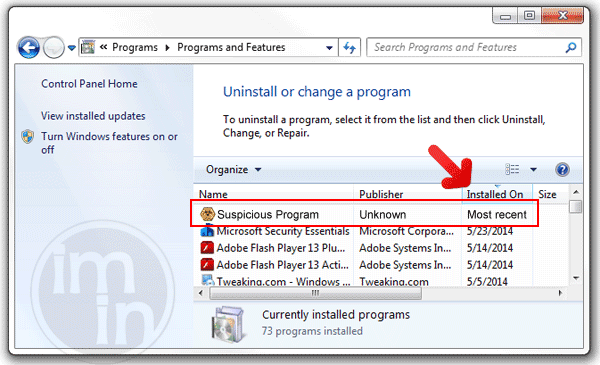
4. Select XP Defender Virus or any suspicious items and then Click on Uninstall button to remove it from Windows.
5. If it prompts for confirmation, please click OK button to proceed.
Procedure 2: Scan and remove XP Defender Virus files with MalwareFox Anti-Malware
To remove XP Defender Virus, download MalwareFox Anti-Malware. This tool is effective in getting rid of Trojans, viruses and malware.

1. After downloading, please install the program using the default settings.
2. At the end of the installation, please make sure that it will download necessary updates.
3. Once update has completed, MalwareFox will launch.

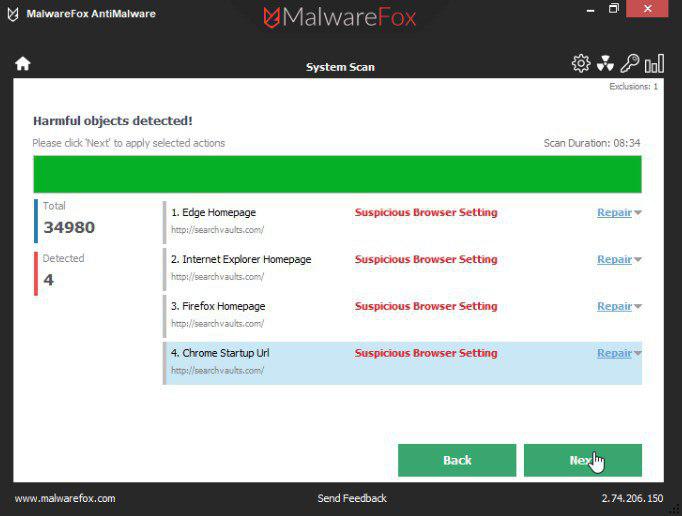
4. Click on SCAN button from the main window.
5. MalwareFox will detect all the infections in the computer system and list all the threats.
6. Click Next button to remove all the infections in one click.
Procedure 3: Scan Computer in Safe Mode Using Installed Anti-virus Program
1. When troubleshooting a PC, one common step is to boot operating system into Safe Mode with Networking. The same approach will be used in the removal of XP Defender Virus. Please execute instructions based on your Windows OS version.
Start Windows 8 / Windows 10 in Safe Mode with Networking
- Close all running programs on your computer because we will need to restart Windows on this procedure.
- Press and Hold Shift key on your keyboard while clicking on Restart.
- You will then be presented with Troubleshooting Options.
- Click on Troubleshoot icon.
- Then, Click on Advanced Options icon.
- Select Startup Settings icon and then, Click on Restart button.
- When Windows restarts, it will prompt to choose number from the list of options. Press the number on your keyboard that corresponds to Safe Mode with Networking, commonly number 5.
- Once in Safe Mode, please proceed to the next step which is running a virus scan on the computer.
Start in Safe Mode with Networking (Windows XP / Vista / 7 Instruction)
- Please restart the computer and just before Windows start, press F8 on your keyboard repeatedly. You will be presented with Advanced Options Menu.
- From the selections, choose Safe Mode with Networking. Please use keyboard's arrow up/down to navigate between selections and press Enter to proceed.

2. Once your Windows is running in Safe Mode, open your installed anti-virus programs and update it to the most recent version by automatically downloading necessary updates.
3. Thoroughly scan the computer and remove all identified threats. Do not restart or turn off the computer after the scan process. You still need to run another scan. Please follow the next procedure.
Procedure 4: Run TrendMicro's Anti-Threat Toolkit (ATTK) to check and delete any remnants of XP Defender Virus.
As an added help to remove XP Defender Virus, you can scan the computer with Anti-Threat Toolkit. This software is provided and distributed by TrendMicro. Follow this procedure to run a scan with this tool.
1. Download the package by clicking on the button below. This will launch a new browser window that contains further details about the tool.

2. Save the file to a location on your hard drive.
3. Browse for the location of the file and double-click to run. If you are using Windows Vista or Windows 7, right-click on extracted file supportcustomizedpackage and click on Run as Administrator.

4. When program launch, it will run a command prompt to initialize, prepare components, and update the program.
5. Next it will open the graphical user interface (GUI) of Anti-Threat Toolkit.

6. Click on Scan Now. This operation will scan all XP Defender Virus files and processes in your computer and display a list of result for possible Fake Antivirus program and malware that needs to be removed.
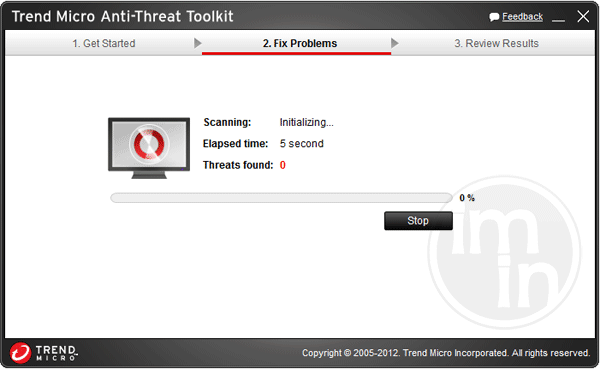
7. Tick all items that are detected by the program, and then click Clean. The tool will start removing XP Defender Virus components from the computer.
8. If it asked you to restart Windows, please do so.
Protect your PC from XP Defender Virus or Similar Attack
Turn On Safe Browsing Features
Google Chrome's Protection from Dangerous Sites
With Google Chrome's Dangerous Site Protection feature, you will have lesser risks browsing the web. It will display a warning when the site you are trying to visit is suspicious, thus, you can prevent XP Defender Virus infection. To enable protection from dangerous sites, please do these steps:
1. Open Google Chrome.
2. In the address bar, type this: chrome://settings/ and then, Press Enter.
3. Once on the settings page, click on Show advanced settings... at the bottom of the page to see the rest of the Chrome setup.
4. Locate Privacy section and mark 'Protect you and your device from dangerous sites'.

5. Please restart Google Chrome. New settings keep your browser safe while surfing the web.
Internet Explorer - Activate SmartScreen Filter
Internet Explorer versions 8 and 9 has this feature called SmartScreen Filter. It helps detect phishing web sites and protect you from downloading malicious programs including XP Defender Virus. To turn on SmartScreen Filter, follow these steps:
1. Please open Internet Explorer.
2. On top menu, select Tools (IE 9). For IE 8, please look for Safety menu.
3. Select SmartScreen Filter from the drop-down list and click on Turn on SmartScreen Filter.
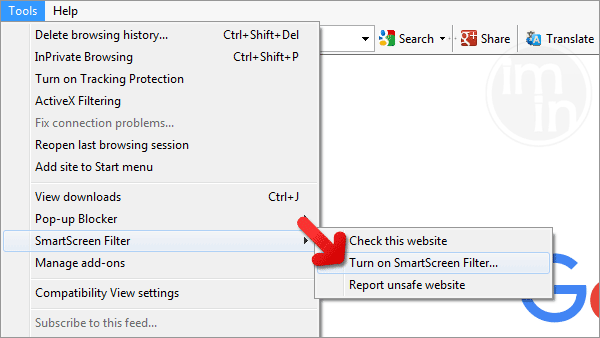
4. Please restart Internet Explorer.
Mozilla Firefox - Block Attack Sites and Web Forgeries
Phishing and Malware Protection is a built-in feature on Firefox version 3 or later. It warns you when a page you are trying to visit contains phishing content or an attack site designed to drop threats such as XP Defender Virus. To help you keep safe while browsing the Internet using Firefox, please follow this guide:
1. Open Mozilla Firefox browser.
2. On top menu, click on Open Menu. Then select Options from the list.
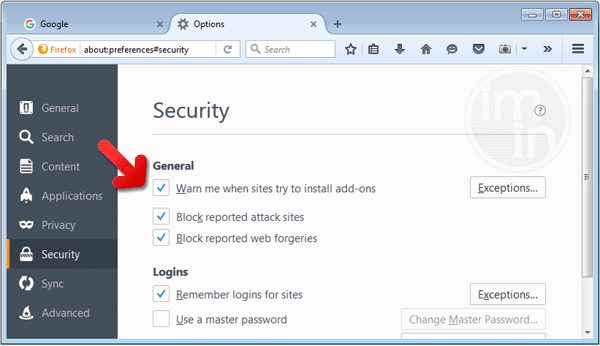
3. Select Security and put a check mark on the following items:
- Warn me when sites try to install add-ons
- Block reported attack sites
- Block reported web forgeries
Edge Browser - SmartScreen Filter
SmartScreen filter is a built-in feature in Microsoft Edge browser that can help you deter malicious programs such as XP Defender Virus. It can block malicious web sites and downloads.
1. Open Microsoft Edge browser.
2. Click on More Actions button located at top right corner of the screen.
3. Select Settings from the drop-down list.
4. Under Settings menu, go to Advanced Settings section and click on View Advanced Settings.
5. Scroll down to "help protect my PC from malicious sites and downloads with SmartScreen Filter". Turn it to ON.
6.You may now restart Microsoft Edge browser.

