

If you receive a pop-up about “Windows Security 2012 has found critical process,” please discontinue your web browsing. You might end up with a malware download. This phony alert originates from harmful web site that will run an imitated virus scan on your computer. It is using a Windows Explorer like interface to make you conclude that the scan locally executed.
Once your click on “Windows Security 2012 has found critical process,” it will open a window. As mentioned, it is a fake scanner. It will issue fake result. Later, it will advise you to download a file Win8Security_scanner.exe. The full message on the fake alert contains the following text:
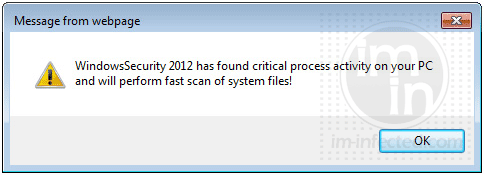
“Message from webpage
Windows Security 2012 has found critical process activity on your PC and will perform fast scan of system files.”
Once you see this pop-up, immediately cease the Internet connection and close the browser window. If you accidentally executed the file, run the scan as suggested below.
What are the Signs of “Windows Security 2012 has found critical process” Pop Up?
Obviously, the fake pop-up will appear on the computer once you pay a visit to harmful web site. Screenshot below shows how the bogus alert looks like.
Threat Summary
| Threat: | "Windows Security 2012 has found critical process" |
| Type: | Rogue Anti-virus |
| Brief Description: | This type of threat will disguise as valid anti-virus application to deceive computer users. |
| Removal Tool: | â–¼ DOWNLOAD MalwareFox |
Description
If you receive a pop-up about “Windows Security 2012 has found critical process,” please discontinue your web browsing. You might end up with a malware download. This phony alert originates from harmful web site that will run an imitated virus scan on your computer. It is using a Windows Explorer like interface to make you conclude that the scan locally executed.
Once your click on “Windows Security 2012 has found critical process,” it will open a window. As mentioned, it is a fake scanner. It will issue fake result. Later, it will advise you to download a file Win8Security_scanner.exe. The full message on the fake alert contains the following text:
“Message from webpage
Windows Security 2012 has found critical process activity on your PC and will perform fast scan of system files.”
Once you see this pop-up, immediately cease the Internet connection and close the browser window. If you accidentally executed the file, run the scan as suggested below.
What are the Signs of “Windows Security 2012 has found critical process” Pop Up?
Obviously, the fake pop-up will appear on the computer once you pay a visit to harmful web site. Screenshot below shows how the bogus alert looks like.
Procedures to Remove "Windows Security 2012 has found critical process"
Removal steps on this page will help you get rid of the threat effectively using tools and virus scanners. Please make sure that you will carry out the guide in exact order.
Procedure 1: Scan Computer in Safe Mode Using Installed Anti-virus Program
1. When troubleshooting a PC, one common step is to boot operating system into Safe Mode with Networking. The same approach will be used in the removal of "Windows Security 2012 has found critical process". Please execute instructions based on your Windows OS version.
Start Windows 8 / Windows 10 in Safe Mode with Networking
- Close all running programs on your computer because we will need to restart Windows on this procedure.
- Press and Hold Shift key on your keyboard while clicking on Restart.
- You will then be presented with Troubleshooting Options.
- Click on Troubleshoot icon.
- Then, Click on Advanced Options icon.
- Select Startup Settings icon and then, Click on Restart button.
- When Windows restarts, it will prompt to choose number from the list of options. Press the number on your keyboard that corresponds to Safe Mode with Networking, commonly number 5.
- Once in Safe Mode, please proceed to the next step which is running a virus scan on the computer.
Start in Safe Mode with Networking (Windows XP / Vista / 7 Instruction)
- Please restart the computer and just before Windows start, press F8 on your keyboard repeatedly. You will be presented with Advanced Options Menu.
- From the selections, choose Safe Mode with Networking. Please use keyboard's arrow up/down to navigate between selections and press Enter to proceed.

2. Once your Windows is running in Safe Mode, open your installed anti-virus programs and update it to the most recent version by automatically downloading necessary updates.
3. Thoroughly scan the computer and remove all identified threats. Do not restart or turn off the computer after the scan process. You still need to run another scan. Please follow the next procedure.
Procedure 2: Scan and remove "Windows Security 2012 has found critical process" files with MalwareBytes Anti-Malware
To remove "Windows Security 2012 has found critical process", download Malwarebytes Anti-Malware. This tool is effective in getting rid of Trojans, viruses and malware.

1. After downloading, please install the program using the default settings.
2. At the end of the installation, please make sure that it will download necessary updates.
3. Once update has completed, MalwareFox will launch.

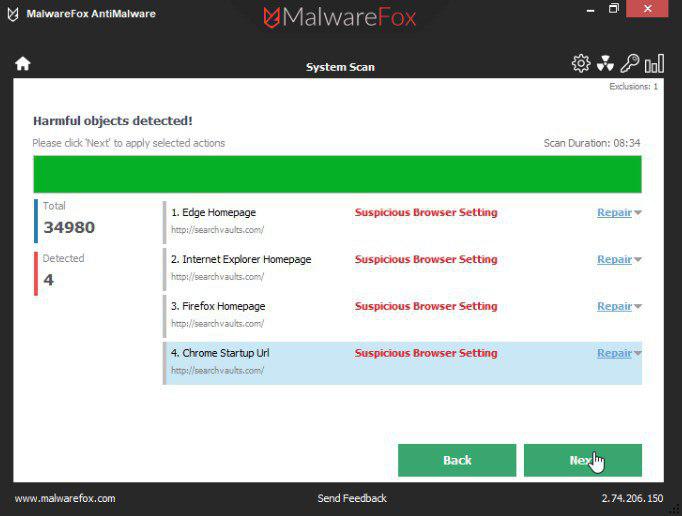
4. Select SCAN button of MalwareFox application.
5. Scanning process will start and infections list will be displayed. Click NEXT to remove them.
Procedure 3: Run extra scan with Junkware Removal Tool
To make sure that no more malicious files linked to "Windows Security 2012 has found critical process" are inside the computer, we must run another effective scanner. This time, use Junkware Removal Tool. No installation is necessary with this tool.

1. Click the button above to start the download process. Save the file to your preferred location.
2. Junkware Removal Tool will close all running applications later. So, before executing the file, please Bookmark or Print this page. And then, close all programs.
3. Double-click the JRT.exe file to initiate the tool.
4. It will prompt you to "Press any key to continue."

5. Junkware Removal Tool will create a Restore Point and proceed with the scan. Please wait for the scan process to finish.
6. After scanning the computer, JRT will open a Notepad containing scan logs. It may have not find "Windows Security 2012 has found critical process" relevant entities, but it will surely delete any malicious items not found in the previous scans.
Procedure 4: Reset Affected Internet Browser
Reset browser settings of Google Chrome:
1. Open Google Chrome browser.
2. In the address bar, type this: chrome://settings/ and then, press Enter.
3. Navigate at the end of the page and click on Show advanced settings.
4. At the bottom of the page, click on Reset settings to remove all changes made by "Windows Security 2012 has found critical process".

Reset Internet Explorer Settings:
1. Open Internet Explorer software.
2. Navigate to top menu and click Tools > Internet Options.
3. On Internet Options window, select Advanced tab.
4. In order to reverse modifications caused by "Windows Security 2012 has found critical process", click on Reset button to bring back Internet Explorer's settings to their default condition.

Reset Firefox to its default state:
1. Open Mozilla Firefox program.
2. Navigate to top menu and Open Help Menu. Then, select on Troubleshooting Information.
3. Click on Refresh Firefox button to erase the effect of "Windows Security 2012 has found critical process".

Protect your PC from "Windows Security 2012 has found critical process" or Similar Attack
Turn On Safe Browsing Features
Google Chrome's Protection from Dangerous Sites
With Google Chrome's Dangerous Site Protection feature, you will have lesser risks browsing the web. It will display a warning when the site you are trying to visit is suspicious, thus, you can prevent "Windows Security 2012 has found critical process" infection. To enable protection from dangerous sites, please do these steps:
1. Open Google Chrome.
2. In the address bar, type this: chrome://settings/ and then, Press Enter.
3. Once on the settings page, click on Show advanced settings... at the bottom of the page to see the rest of the Chrome setup.
4. Locate Privacy section and mark 'Protect you and your device from dangerous sites'.

5. Please restart Google Chrome. New settings keep your browser safe while surfing the web.
Internet Explorer - Activate SmartScreen Filter
Internet Explorer versions 8 and 9 has this feature called SmartScreen Filter. It helps detect phishing web sites and protect you from downloading malicious programs including "Windows Security 2012 has found critical process". To turn on SmartScreen Filter, follow these steps:
1. Please open Internet Explorer.
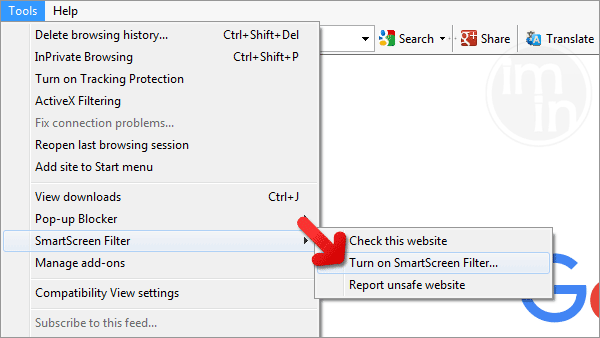
2. On top menu, select Tools (IE 9). For IE 8, please look for Safety menu.
3. Select SmartScreen Filter from the drop-down list and click on Turn on SmartScreen Filter.
4. Please restart Internet Explorer.
Mozilla Firefox - Block Attack Sites and Web Forgeries
Phishing and Malware Protection is a built-in feature on Firefox version 3 or later. It warns you when a page you are trying to visit contains phishing content or an attack site designed to drop threats such as "Windows Security 2012 has found critical process". To help you keep safe while browsing the Internet using Firefox, please follow this guide:
1. Open Mozilla Firefox browser.
2. On top menu, click on Open Menu. Then select Options from the list.
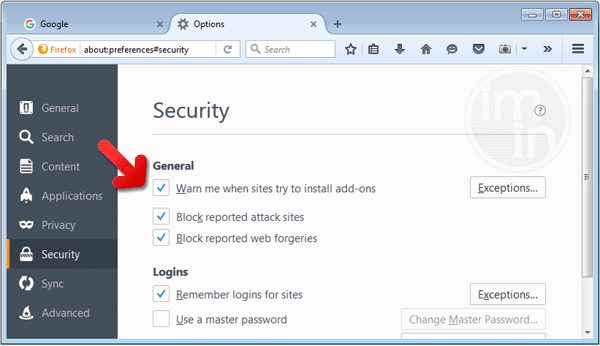
3. Select Security and put a check mark on the following items:
- Warn me when sites try to install add-ons
- Block reported attack sites
- Block reported web forgeries
Edge Browser - SmartScreen Filter
SmartScreen filter is a built-in feature in Microsoft Edge browser that can help you deter malicious programs such as "Windows Security 2012 has found critical process". It can block malicious web sites and downloads.
1. Open Microsoft Edge browser.
2. Click on More Actions button located at top right corner of the screen.
3. Select Settings from the drop-down list.
4. Under Settings menu, go to Advanced Settings section and click on View Advanced Settings.
5. Scroll down to "help protect my PC from malicious sites and downloads with SmartScreen Filter". Turn it to ON.
6.You may now restart Microsoft Edge browser.

