

Presence of a computer virus called Windows Virtual Security does not only cause damage to the system but also endangers identity of the victim. The program lives with the main goal of letting you pay for the useless software using your credit card account. Once you used the assigned payment processor, attacker may steal your credentials including full name and credit card details. For this reason, we highly urged immediate removal of the Windows Virtual Security malware from an affected computer.
The time that Windows Virtual Security reaches your computer, it starts initiating harmful plots. There will be major changes on how the computer operates and it will be very irritating in your part. Virus scan welcomes you once you login to Windows and you will be notified of quite a number of threats. If fear comes first, user will be obliged to pay for the Windows Virtual Security registration key and this means easy money for its creator. That is how rogue program evolve. Using scare tactics such as fake alerts, false scan results, and misleading diagnosis always lead naïve user to its trap. Whatever happens, just ignore this fake antivirus software. There is other alternative to settle the issue, and that means complete removal of the malware.
To remove Windows Virtual Security from an infected computer, you need to remove numerous files and registry entries it dropped inside the PC. Manually locating these modules is too complex. Thus, we recommend automatic uninstall using a removal tool as made ready on the guide below.
What are the Symptoms of Windows Interactive Safety Infection?
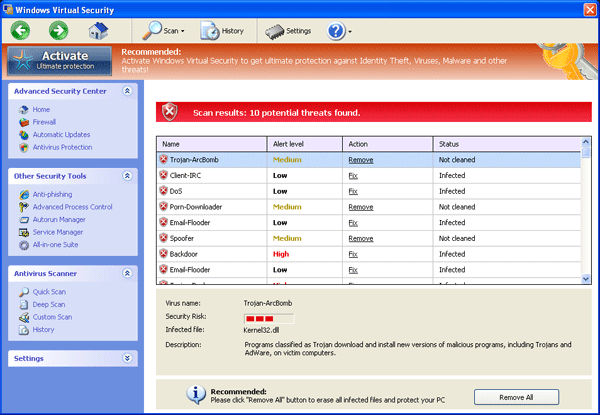
Image below is the fake scanner by Windows Virtual Security. It produces a bunch of false security that attempts to lure victims into purchasing the licensed version of rogue program.
Procedure 1: Uninstall Windows Virtual Security from Windows Control Panel
1. Begin the removal process by uninstalling the rogue program from Windows. To do this, we need to open Control Panel. Please ensure that you are logon with the Administrative privilege to access this function.
Accessing Control Panel in Windows 8 and Windows 10
- On your keyboard, Press Windows Key + X.
- Once Quick Access Menu appears on the screen, please click on Control Panel.
- Control Panel window will open. Please proceed to the next step which is uninstalling Windows Virtual Security.
How to access Control Panel in Windows XP, Windows Vista / 7
- Click on Start button that can be found on bottom left corner of the screen.
- From the list, choose Control Panel to access settings of Windows and make the needed changes.

2. To uninstall Windows Virtual Security, click on Uninstall a program under Programs Section. It will open a Program and Features window where-in you can uninstall, change, or repair installed software.
3. Look for Windows Virtual Security title or any suspicious name that was installed recently. To do this, you need to arrange the items chronologically. Click on Installed On to display recently installed programs.
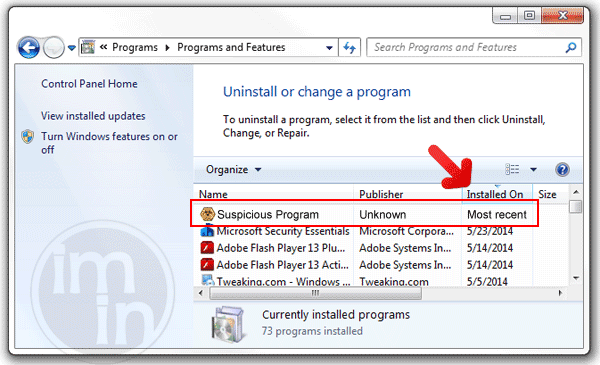
4. Select Windows Virtual Security or any suspicious items and then Click on Uninstall button to remove it from Windows.
5. If it prompts for confirmation, please click OK button to proceed.
Procedure 2: Scan and remove Windows Virtual Security files with MalwareFox Anti-Malware
To remove Windows Virtual Security, download MalwareFox Anti-Malware. This tool is effective in getting rid of Trojans, viruses and malware.

1. After downloading, please install the program using the default settings.
2. At the end of the installation, please make sure that it will download necessary updates.
3. Once update has completed, MalwareFox will launch.

4. Click on SCAN button from the main window.
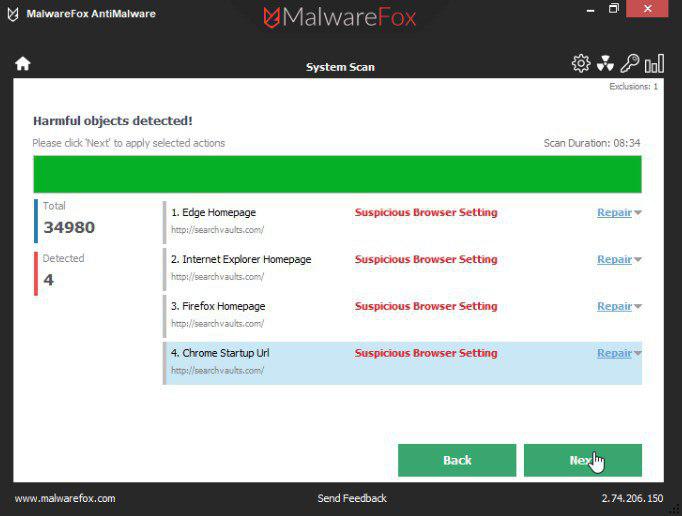
5. MalwareFox will detect all the infections in the computer system and list all the threats.
6. Click Next button to remove all the infections in one click.
Procedure 3: Scan Computer in Safe Mode Using Installed Anti-virus Program
1. When troubleshooting a PC, one common step is to boot operating system into Safe Mode with Networking. The same approach will be used in the removal of Windows Virtual Security. Please execute instructions based on your Windows OS version.
Start Windows 8 / Windows 10 in Safe Mode with Networking
- Close all running programs on your computer because we will need to restart Windows on this procedure.
- Press and Hold Shift key on your keyboard while clicking on Restart.
- You will then be presented with Troubleshooting Options.
- Click on Troubleshoot icon.
- Then, Click on Advanced Options icon.
- Select Startup Settings icon and then, Click on Restart button.
- When Windows restarts, it will prompt to choose number from the list of options. Press the number on your keyboard that corresponds to Safe Mode with Networking, commonly number 5.
- Once in Safe Mode, please proceed to the next step which is running a virus scan on the computer.
Start in Safe Mode with Networking (Windows XP / Vista / 7 Instruction)
- Please restart the computer and just before Windows start, press F8 on your keyboard repeatedly. You will be presented with Advanced Options Menu.
- From the selections, choose Safe Mode with Networking. Please use keyboard's arrow up/down to navigate between selections and press Enter to proceed.

2. Once your Windows is running in Safe Mode, open your installed anti-virus programs and update it to the most recent version by automatically downloading necessary updates.
3. Thoroughly scan the computer and remove all identified threats. Do not restart or turn off the computer after the scan process. You still need to run another scan. Please follow the next procedure.
Procedure 4: Run TrendMicro's Anti-Threat Toolkit (ATTK) to check and delete any remnants of Windows Virtual Security.
As an added help to remove Windows Virtual Security, you can scan the computer with Anti-Threat Toolkit. This software is provided and distributed by TrendMicro. Follow this procedure to run a scan with this tool.
1. Download the package by clicking on the button below. This will launch a new browser window that contains further details about the tool.

2. Save the file to a location on your hard drive.
3. Browse for the location of the file and double-click to run. If you are using Windows Vista or Windows 7, right-click on extracted file supportcustomizedpackage and click on Run as Administrator.

4. When program launch, it will run a command prompt to initialize, prepare components, and update the program.
5. Next it will open the graphical user interface (GUI) of Anti-Threat Toolkit.

6. Click on Scan Now. This operation will scan all Windows Virtual Security files and processes in your computer and display a list of result for possible Fake Antivirus program and malware that needs to be removed.
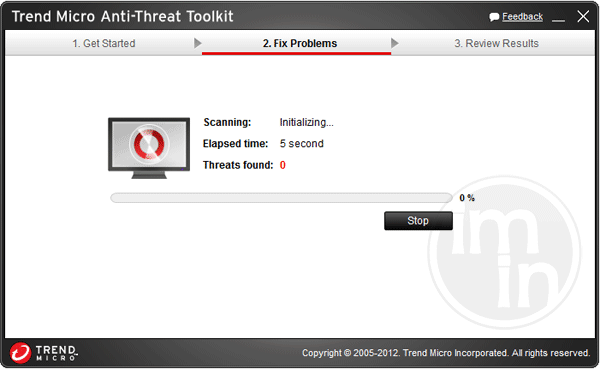
7. Tick all items that are detected by the program, and then click Clean. The tool will start removing Windows Virtual Security components from the computer.
8. If it asked you to restart Windows, please do so.
Protect your PC from Windows Virtual Security or Similar Attack
Turn On Safe Browsing Features
Google Chrome's Protection from Dangerous Sites
With Google Chrome's Dangerous Site Protection feature, you will have lesser risks browsing the web. It will display a warning when the site you are trying to visit is suspicious, thus, you can prevent Windows Virtual Security infection. To enable protection from dangerous sites, please do these steps:
1. Open Google Chrome.
2. In the address bar, type this: chrome://settings/ and then, Press Enter.
3. Once on the settings page, click on Show advanced settings... at the bottom of the page to see the rest of the Chrome setup.
4. Locate Privacy section and mark 'Protect you and your device from dangerous sites'.

5. Please restart Google Chrome. New settings keep your browser safe while surfing the web.
Internet Explorer - Activate SmartScreen Filter
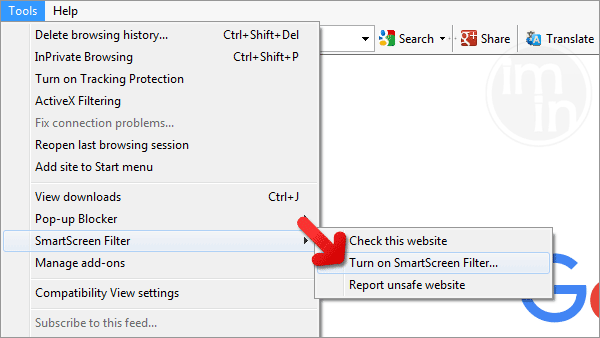
Internet Explorer versions 8 and 9 has this feature called SmartScreen Filter. It helps detect phishing web sites and protect you from downloading malicious programs including Windows Virtual Security. To turn on SmartScreen Filter, follow these steps:
1. Please open Internet Explorer.
2. On top menu, select Tools (IE 9). For IE 8, please look for Safety menu.
3. Select SmartScreen Filter from the drop-down list and click on Turn on SmartScreen Filter.
4. Please restart Internet Explorer.
Mozilla Firefox - Block Attack Sites and Web Forgeries
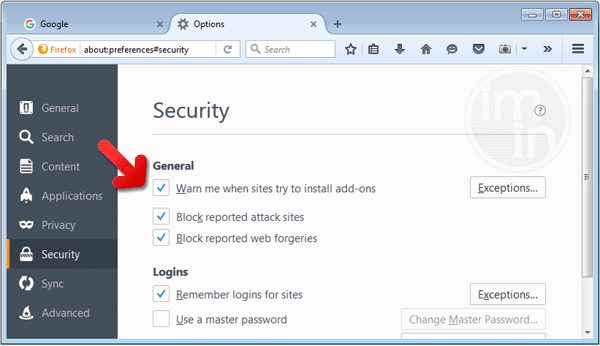
Phishing and Malware Protection is a built-in feature on Firefox version 3 or later. It warns you when a page you are trying to visit contains phishing content or an attack site designed to drop threats such as Windows Virtual Security. To help you keep safe while browsing the Internet using Firefox, please follow this guide:
1. Open Mozilla Firefox browser.
2. On top menu, click on Open Menu. Then select Options from the list.
3. Select Security and put a check mark on the following items:
- Warn me when sites try to install add-ons
- Block reported attack sites
- Block reported web forgeries
Edge Browser - SmartScreen Filter
SmartScreen filter is a built-in feature in Microsoft Edge browser that can help you deter malicious programs such as Windows Virtual Security. It can block malicious web sites and downloads.
1. Open Microsoft Edge browser.
2. Click on More Actions button located at top right corner of the screen.
3. Select Settings from the drop-down list.
4. Under Settings menu, go to Advanced Settings section and click on View Advanced Settings.
5. Scroll down to "help protect my PC from malicious sites and downloads with SmartScreen Filter". Turn it to ON.
6.You may now restart Microsoft Edge browser.


Good advice, although ultimately I’m not sure it’s 100% successful – I use Mozilla Firefox, and all three of those options were checked _before_ Windows Virtual Security found its way onto my computer.
Another note: I was able to complete procedure 2 in safe mode (IOW, to prevent WVS from manifesting itself in the process), but not procedure 3. Not sure if that’s a universal issue or just one with my computer – but it didn’t matter anyway, as neither procedures 3 nor 4 really did anything. My issue seems to have solved itself with procedure 2 (there was exactly one virus, plus I was in safe mode anyway).
Interestingly, WVS “unexpectedly shut down” about 10 minutes after I first noticed it yesterday morning – the computer was either on or hibernating the whole rest of the day and never came back. Then I saw it again this morning, and I didn’t want to take any risks – before I did anything else I reset my computer to three days ago, which a) allowed my old antivirus software to function again and b) allowed me to use the Internet again (something I wasn’t able to do under WVS, not with Firefox, not with IE, not even with Google Chrome which I had previously downloaded as a backup browser). Then I immediately typed “windows virtual security” into Google and found you guys – good to know that my suspicions on WVS were true. (There’s a reason why you can’t access WVS via “Security” in the Control Panel, at least not on Vista. Plus, I have a personal rule of never paying for any software I find online – so take _that_, hackers!)
Anyway, if WVS ever comes back again (remember, neither procedure 3 nor 4 did anything, and I didn’t perform either in safe mode), I’d like to hear your response and take it from there. Thanks!
Senior is right. Procedure 2 using malwarebytes alone have removed Windows Virtual Security. However, tech staff from this web site includes rootkit removal due to some cases that attackers are using the Trojan to spread the malware.
In my case, Trojan did not implicate the infection. I think Windows Virtual Security is bundled with a crack program I downloaded from warez.
Thanks to this guide. It really helps.