How to remove Trojan.FakeAV!gen125

Trojan.FakeAV!gen125 is a detection for malware that attempts to drop and execute a copy of fake-antivirus program onto victim’s PC. To remove this threat, you must scan the system with legitimate anti-malware and anti-virus tools.
Trojan.FakeAV!gen124 Removal Steps

Trojan.FakeAV!gen124 is a generic detection by Symantec products to identify a virus or malware that aims to drop and install rogue security product onto target computer. In order to remove this threat, you may follow the guide on this article.

VirTool:Win32/Obfuscator.XZ

VirTool:Win32/Obfuscator.XZ is a malware that looks for system flaw in order to get into your PC. On other times, this Trojan misleads you to download software update, or deceive you to visit certain link. By any chance, once you make yourself believe to this nasty trick by VirTool:Win32/Obfuscator.XZ, chances are you will have added malware onto the computer.

Read more

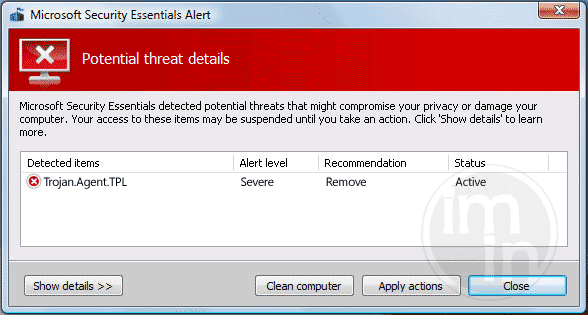
Remove Trojan.Agent.TPL

Trojan.Agent.TPL is a malware program that you must remove as soon as you detect it. This Trojan can be filled in your system as fast as you never imagine. It has the ability to steal private data’s and right after forward it to remote servers just as quick as you can imagine. Before you knew it, Trojan.Agent.TPL has caused damages to your system as well as to your important files.

Read more

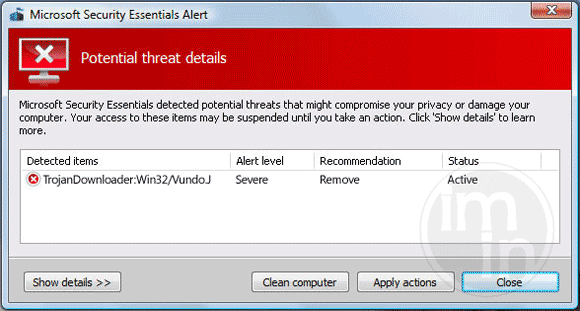
Remove TrojanDownloader:Win32/Vundo.J

TrojanDownloader:Win32/Vundo.J is a Trojan that sneaks into computer via spam email messages, which contain text about recent events and occasions. Other victims used to download this virus when they are tricked by misleading web sites.

Read more

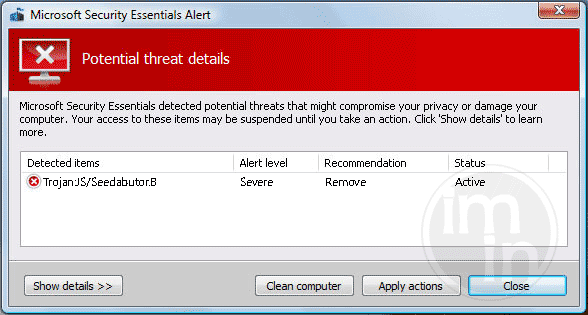
Trojan:JS/Seedabutor.B

Trojan:JS/Seedabutor.B is considered as harmful Trojan that primarily affects Internet browser on the computer. This threat is made with JavaScript that tries to redirect browser to unknown web sites. It is noticed that Trojan:JS/Seedabutor.B is utilized by malware authors as a tool to further infect a target computer. Web page it points user’s Internet browser is comprised of another threat that can be downloaded into the computer. In most instances, Trojan:JS/Seedabutor.B is linked to rogue program, adware, and rootkit Trojans.

Read more

Remove JS/Redir.BP

JS/Redir.BP is a computer malware that when executed will execute a code to redirect your browser to specified web pages. This threat normally arrive as malicious Java Script file. It comes attached to spam email messages or links from social networking sites. On most instances, user executes the script unintended upon visiting web sites that is compromised with JS/Redir.BP. Drive-by-download scheme on those web sites may run the virus instantly.

Read more

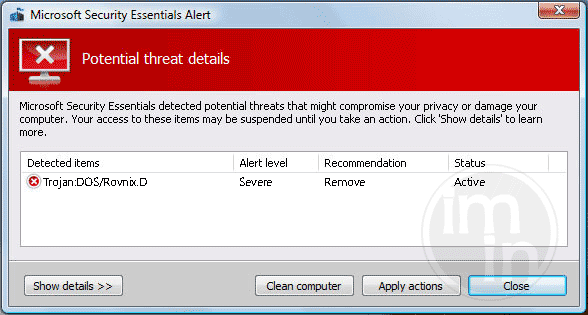
Remove Trojan:DOS/Rovnix.D

Trojan:DOS/Rovnix.D is a kind of Trojan that can be too risky when it reaches a computer. It is observed that this Trojan has multi-component and belongs to a family of malware. Trojan:DOS/Rovnix.D is deployed by means of another Trojan from the same group. It can be acquired from compromised web sites, spam emails, social networking site, and instant messaging program. If this is the case, you have all the options to avoid Trojan:DOS/Rovnix.D. Do not click on suspicious links and never download files from unknown sources.

Read more

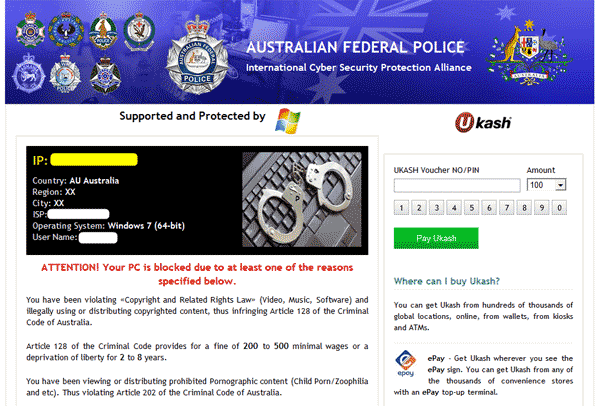
Remove Trojan:Win32/Urausy.D

Trojan:Win32/Urausy.D is detection for a variant of Trojan originating from Urausy family. This kind of threat intends to block user’s access to the PC and demands payment to unlock. It denies your access by showing warning message in full screen view and contains bogus alert. Trojan:Win32/Urausy.D often disguise as a letter from authorities telling you of online violation. Payment must be made as a fine to your unlawful act.

Read more

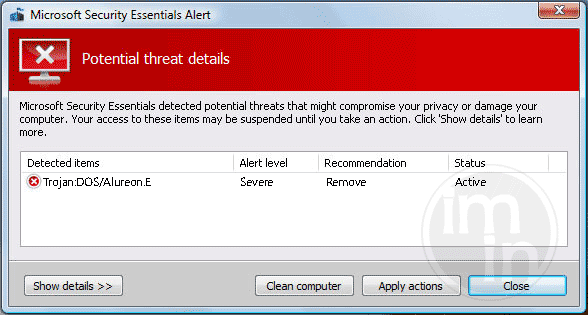
Remove Trojan:DOS/Alureon.E

Trojan:DOS/Alureon.E refers to an infected Volume Boot Records (VBR) of the computer. This is caused by certain variants of Alureon Trojan. The threat is so harmful and will target both systems in 32-Bit and 64-Bit. With rootkit involved, Trojan:DOS/Alureon.E controls how the system boots while loading the harmful code. Rootkit also hides the presence of the Trojan, which makes it concealed to your anti-virus program.

Read more